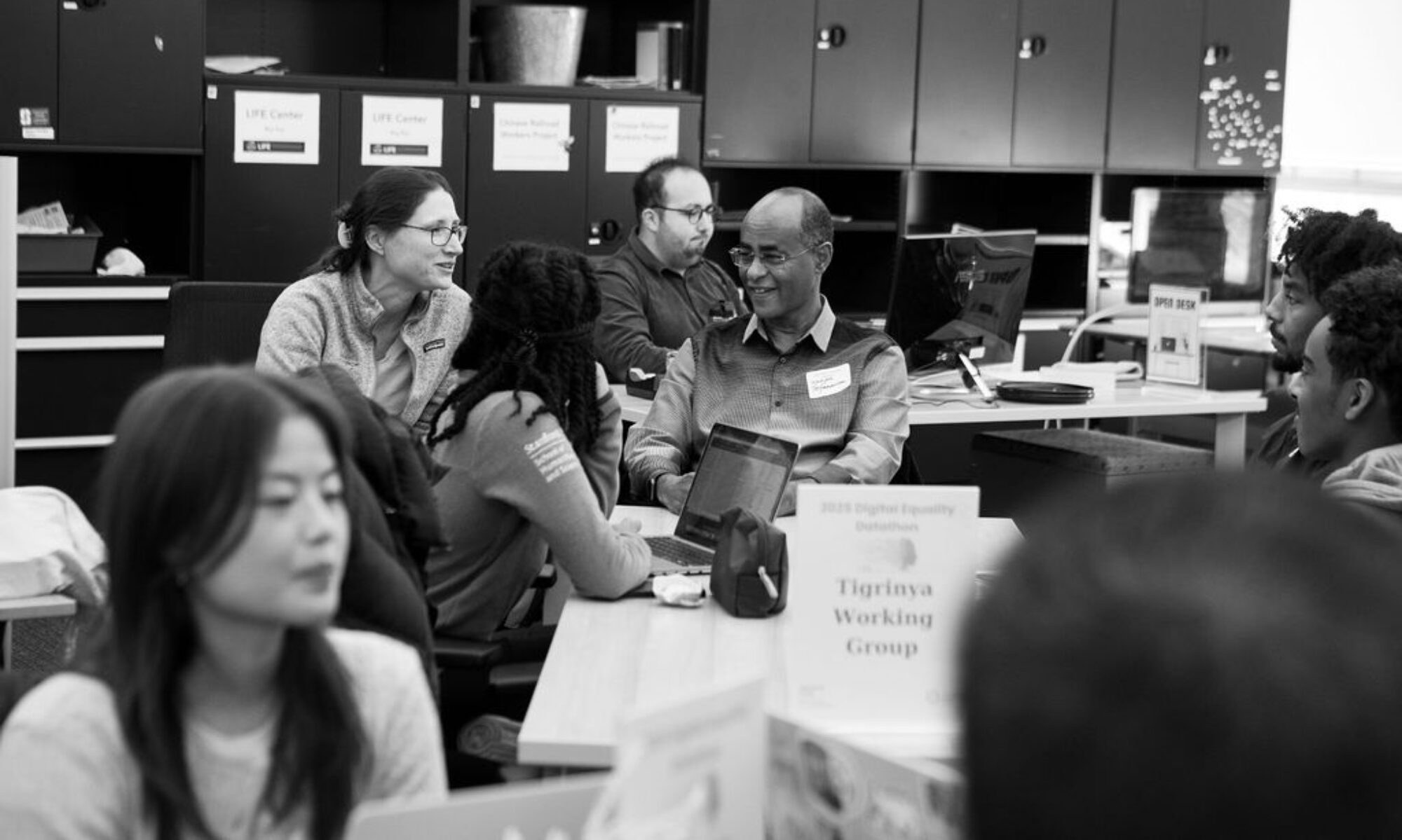

Thomas S. Mullaney is Director of SILICON. He is a Professor of Chinese History at Stanford University, Kluge Chair in Technology and Society at the Library of Congress, and a Guggenheim Fellow. He is the author or lead editor of 8 books, including How We Disappear: A Personal History of Information (Norton, 2026 Forthcoming), The Chinese Computer: A Global History of the Information Age (MIT Press, 2024), Where Research Begins (University of Chicago Press, 2022, with Christopher Rea), The Chinese Typewriter: A History (MIT Press, 2017, winner of the Fairbank Prize), and Coming to Terms with the Nation: Ethnic Classification in Modern China (UC Press, 2010). He earned his BA and MA from the Johns Hopkins University, and his PhD from Columbia University. For the past 15 years, his research, publications, conference planning, and coursework have focused expressly on asymmetries in the global information and language technologies, with a keen focus on writing systems that have been systematically marginalized and excluded from the modern information age.
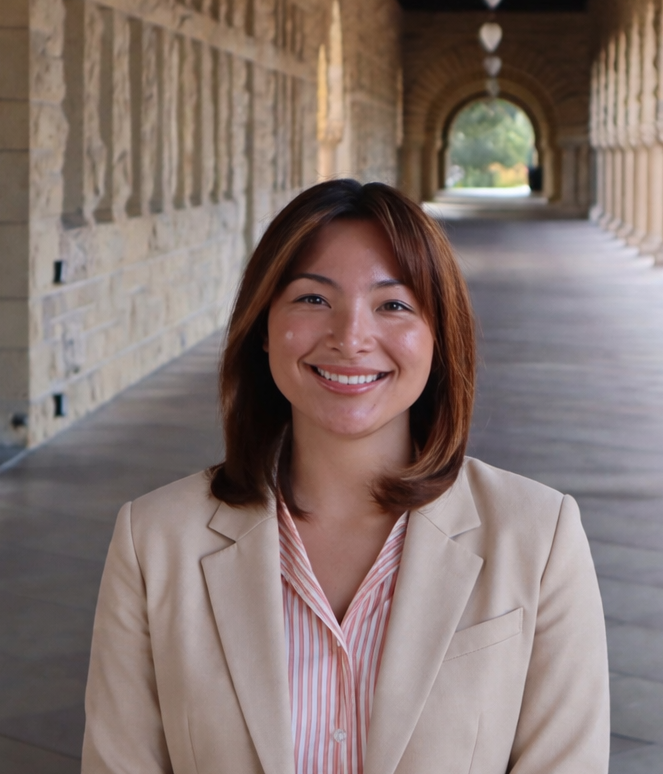
Audrey Gao is the SILICON Project Manager. She holds a bachelor’s degree from Emory University in philosophy and political science. At SILICON, Audrey manages project work with practitioners, students, and partner organizations. Much of her work also involves scaling global community engagement efforts that support participation and dialogue in language digitization. A native Mandarin speaker, Audrey spent 7 years living and studying in Beijing, China.

Quinn Dombrowski (non-binary, any pronouns are fine) is the Academic Technology Specialist in the Division of Literatures, Cultures, and Languages, and in the Library, at Stanford University. Prior to coming to Stanford in 2018, Quinn’s many DH adventures included supporting the high-performance computing cluster at UC Berkeley, running the DiRT tool directory with support from the Mellon Foundation, writing books on Drupal for Humanists and University of Chicago library graffiti, and working on the program staff of Project Bamboo, a failed digital humanities cyberinfrastructure initiative. Quinn has a BA/MA in Slavic Linguistics from the University of Chicago, and an MLIS from the University of Illinois at Urbana-Champaign. Since coming to Stanford, Quinn has supported numerous non-English DH projects, taught courses on non-English DH, developed a tabletop roleplaying game to teach DH project management, explored trends in multilingual Harry Potter fanfic, and started the Data-Sitters Club, a feminist DH pedagogy and research group focused on Ann M. Martin’s 90’s girls series “The Baby-Sitters Club”. Quinn is currently co-VP of the Association for Computers and the Humanities along with Roopika Risam, and advocates for better support for DH in languages other than English.

Anne Ladyem McDivitt is the Academic Technology Specialist for the Department of History at Stanford University, as well as a member of Research Data Services at Stanford University Libraries. She collaborates with the Department of History to support their digital research, projects, and pedagogy. She has a background in digital public history and specializes in digital storytelling. Her personal research focuses on the history of the video game industry with a focus on gender, as well as video game studies.
Founding Co-PIs

Elaine Treharne is a founding SILICON Co-PI. She is the Senior Associate Vice Provost for Undergraduate Education and the Roberta Bowman Denning Professor of the Humanities, Professor of English, Courtesy Professor of German Studies and of Comparative Literature, and the Robert K. Packard Fellow in Undergraduate Education at Stanford University. She is a medievalist, focusing on Manuscript and Archival Studies, Early British Literary Studies, and the long History of Text Technologies. She has published thirty-eight books and some eighty articles on these areas. She has significant expertise in the uses of digital tools and methods for analyzing manuscripts and scripts, and is the PI of the AHRC-funded Production and Use of English Manuscripts 1060-1220; Stanford’s NEH-funded Global Currents; and of the HP-funded Stanford CyberText. Treharne specializes in the handmade book and in premodern writing systems and recently published Perceptions of Medieval Manuscripts with OxfordUP. She is a Fellow of the Society of Antiquaries, a Fellow of the Royal Historical Society, an Honorary Fellow of the English Association, and a Fellow of the Learned Society of Wales.
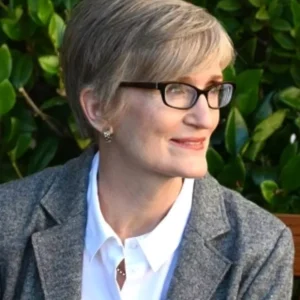
Kathryn Starkey (Division of Literatures, Cultures, and Languages) is founding SILICON Co-PI. She is a Professor of German and, by courtesy, Professor of English, History, and Comparative Literature. A medievalist, much of her research has focused on literature from the eleventh to the thirteenth century with a particular emphasis on language, poetics, and media. She is the author, co-author, or co-editor of 9 books, and the PI of the Global Medieval Sourcebook, an NEH-funded digital repository of two hundred medieval texts in 25 different languages. As part of the Global Medieval Sourcebook, Starkey has experience navigating the challenges of digital typography across multiple scripts, as well as technical issues related to searching, and presenting multilingual texts. She received her MA (in Germanic Linguistics) and her PhD (in German Literature and Culture) from the University of California, Berkeley. She is the recipient of grants from the NEH, the Alexander von Humboldt Foundation, and SSHRC, among others, and has held visiting appointments at the Universities of Palermo (2011) and Freiburg im Breisgau (2013 and 2018).